Arden Pen Co / Journal / Two burls, and an awkward question
Two burls, and an awkward question
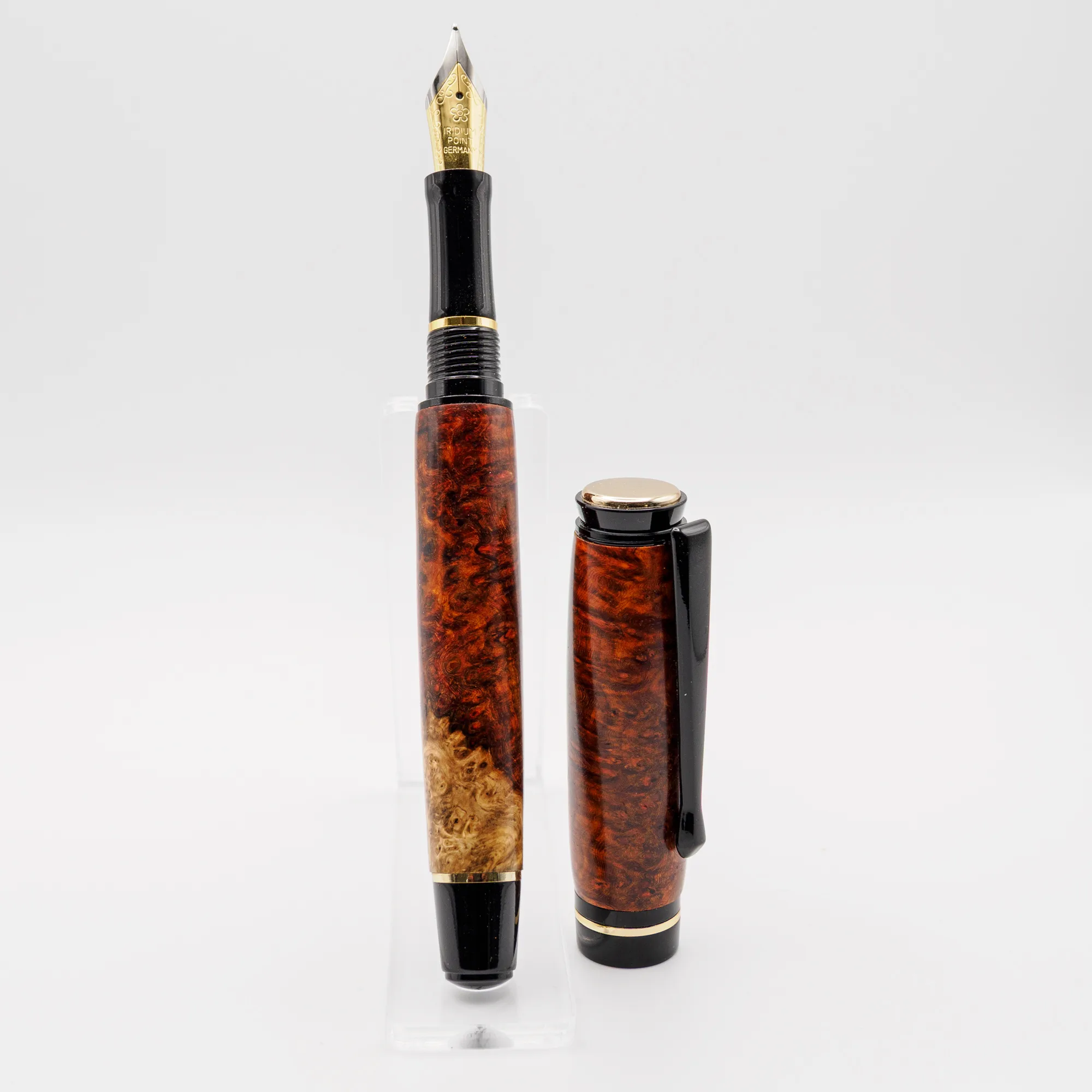
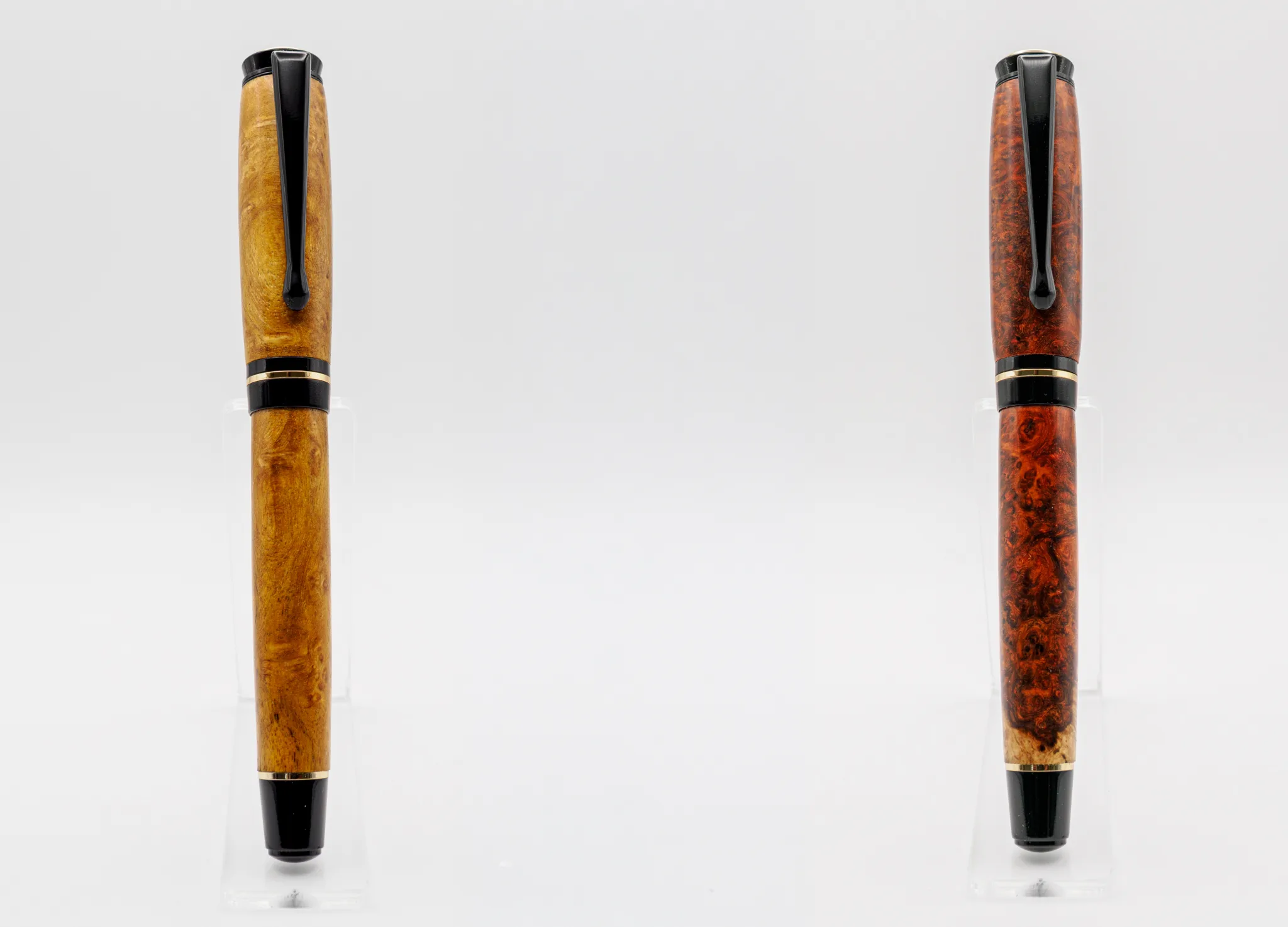
Two Stratford II fountain pens came off the bench today, both in black chrome with gold accents, and both turned from burl. They look like a pair. They are not, and the difference between them is worth more than a paragraph.
Two Stratford II fountain pens came off the bench today, both in black chrome with gold accents, and both turned from burl. They look like a pair. They are not, and the difference between them is worth more than a paragraph.
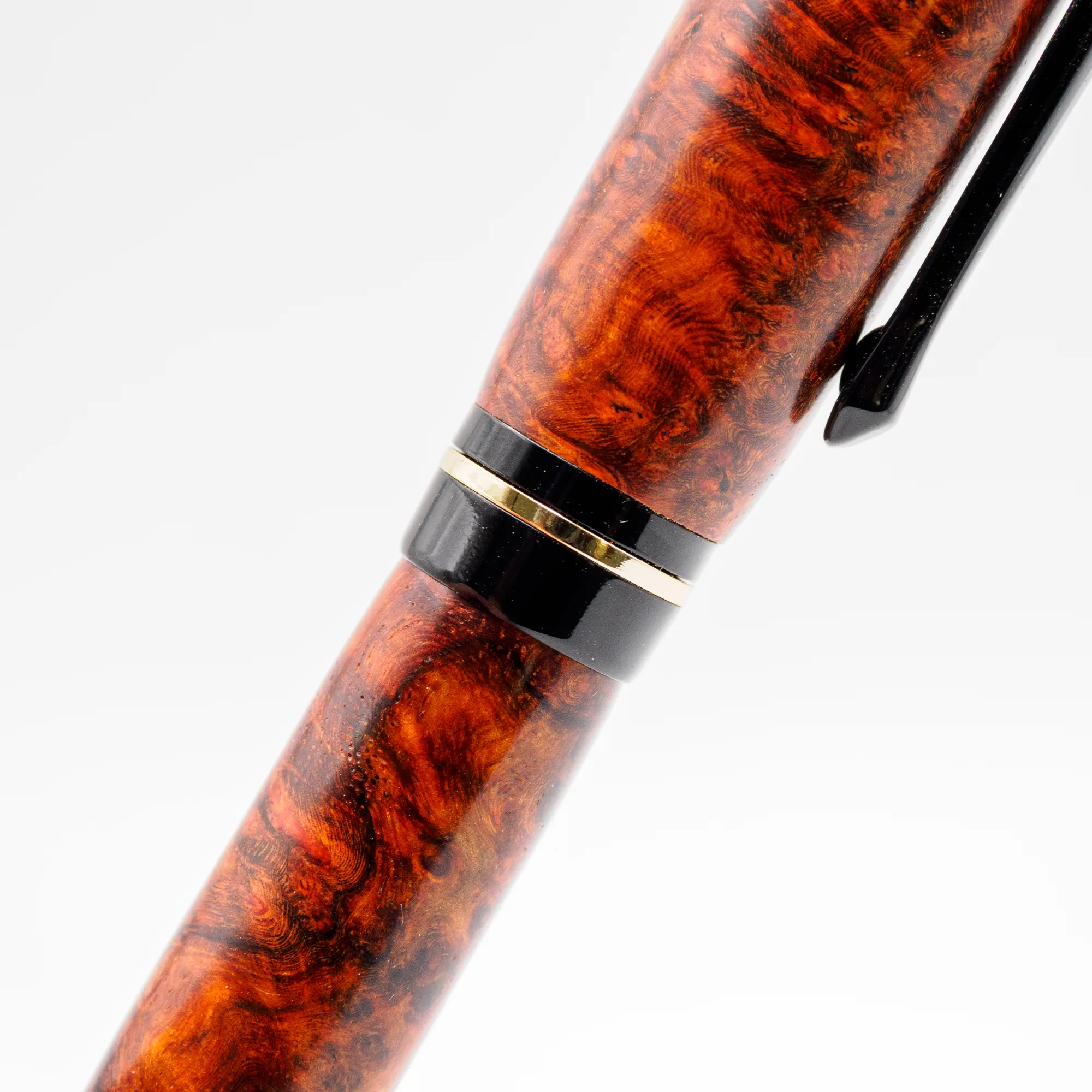
The first is red amboyna burl — a deep, restless red shot through with black, the grain moving in tight whorls that never quite resolve into a pattern. Toward the foot of the barrel it drops abruptly into pale cream sapwood, which is not a flaw and not something I planned. It is where the burl met the outside of the tree, and I turned the blank to keep it rather than cut it away.
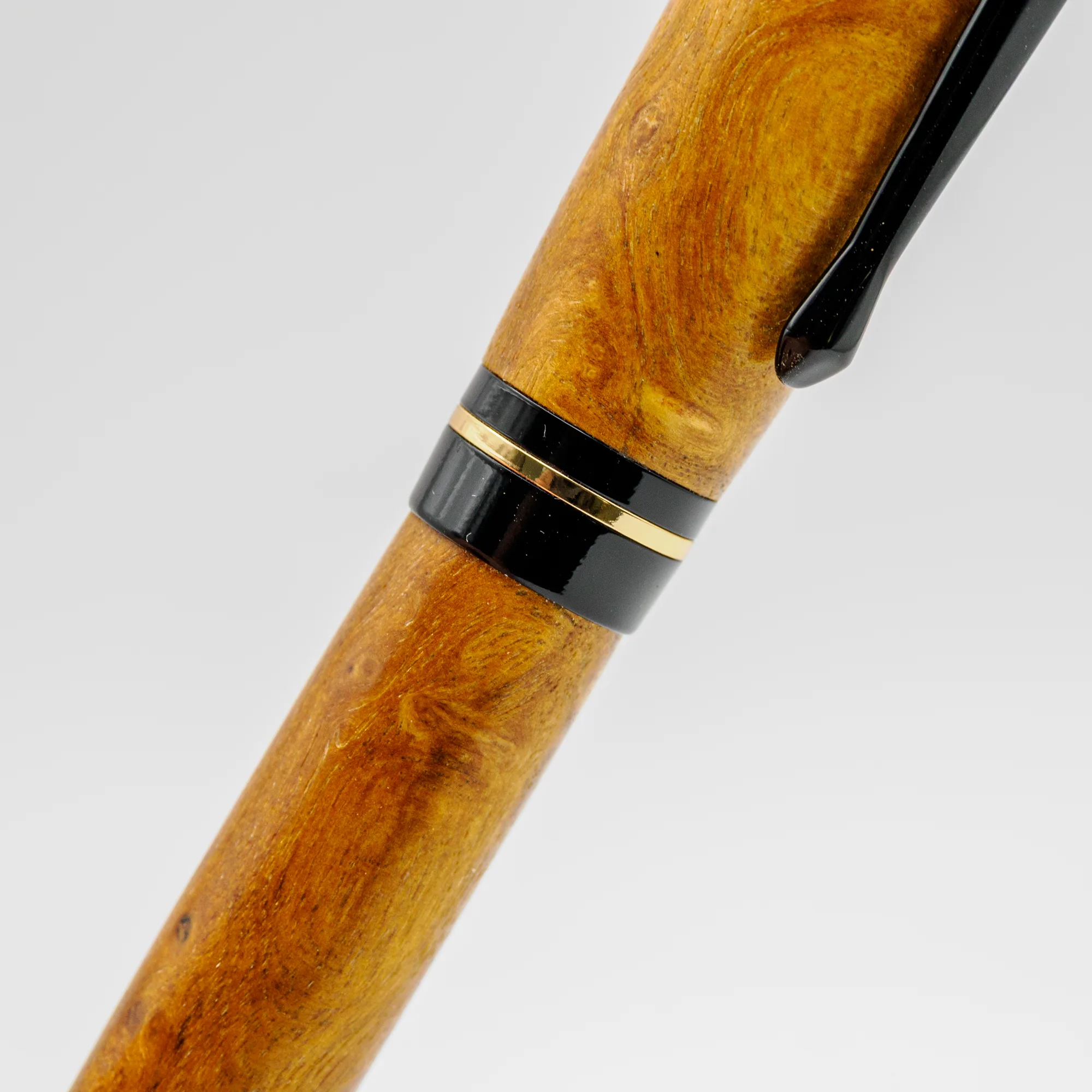
The second is cheesewood burl, and it is the quieter of the two: honey and old gold, a soft mottled figure that reads almost like light on water. Where the amboyna shouts, this one waits to be picked up.
The awkward part
Amboyna is Pterocarpus indicus. It is on the IUCN Red List, and the current assessment puts it as Endangered — a population that has fallen far enough that the species is considered at serious risk in the wild. It is not listed under CITES, so it can be traded lawfully without permits. Those two facts sitting side by side are the whole problem in miniature: legal to buy is not the same as sensible to buy.
Cheesewood, by contrast, is Alstonia congensis, assessed globally as of Least Concern. Even then it is not a blank cheque — the species has been reported as regionally endangered in Benin and Nigeria, which is a reminder that a global category can hide a local crisis.
So one of these two pens is made from a threatened species. I could have quietly not mentioned it. I would rather set out why I bought it and how, and let you judge.
Wood against resin
Earlier this week I turned a run of pens from genuine Conway Stewart resin — original stock from the closure of that firm's workshop. Set those against these two and you have the whole argument on one bench.
The resin pens involve no tree at all. Nothing was felled for them. Better still, that material already existed and was going nowhere: it was cast decades ago for pens that were never made, and had it not been bought at the liquidation it would very likely have gone to landfill. Judged honestly, those are probably the most environmentally defensible pens I have ever made — not because resin is virtuous, but because using up something that already exists beats making anything new.
That is the catch, though. It is a special case, and a finite one. Ordinary resin has no such story. It is a petrochemical product, it does not rot, and a pen made from it will outlast the person who owns it by several centuries in a way nobody intended.
Wood is the opposite shape of problem. It grows back, it stores carbon while it does so, and at the end of everything it returns to the ground. It is renewable in a way plastic can never be. But renewable is a property of the forest, not of the plank — and whether that particular property survived the journey from tree to my lathe depends entirely on how the tree came down.
Which is the actual question. Not wood or plastic. Traceable or not.
Where the damage really happens
A pen barrel is a small thing. A blank is typically a couple of inches of timber, and a great deal of what reaches pen makers is offcut and salvage — material already surplus to a larger job. Burls in particular are growths rather than trunks, and much of what I use comes off trees that were coming down regardless.
None of which matters if you buy from someone who cannot tell you where it came from.
The rosewood trade over the past fifteen years is the cautionary tale. Demand rose, prices rose with it, and species that were merely uncommon became genuinely threatened inside a couple of decades — much of it moving through supply chains where the paperwork was either absent or invented. When CITES eventually listed the African Pterocarpus species in 2022, it was catching up with damage already done.
The cheap end of the market is where that happens. A blank at half the going rate from a seller who will not name the country of origin is not a bargain — it is somebody else's enforcement problem, sold on at a discount. I would rather pay more, buy less, and be able to answer the question.
What that means here
For the amboyna, I buy through a supplier who documents origin and legal harvest, and who can stand behind the claim that the material was taken in a way that leaves the forest standing. I buy small quantities. I do not stockpile it, and I do not make it a house material — it will always be an occasional pen rather than a range.
For everything else, the principle is the same one I have used since the beginning: know where it came from, and be willing to say so out loud. Sometimes that means carrying the wood home myself. Sometimes it means paying over the odds for a documented blank. Once or twice it has meant not buying at all.
A pen that lasts fifty years and gets handed on is not a bad way to use a piece of tree. But only if the tree could afford it.
Commission
Build the spec, and I’ll quote it
Pick the pen, the fittings, the plating and the material — including your own timber if you’ve got something with meaning to it. Takes about two minutes, and there’s no obligation at the end of it.
- 01 Pen type and model
- 02 Plating and accents
- 03 Material and species
- 04 Presentation case
- 05 Your notes and details